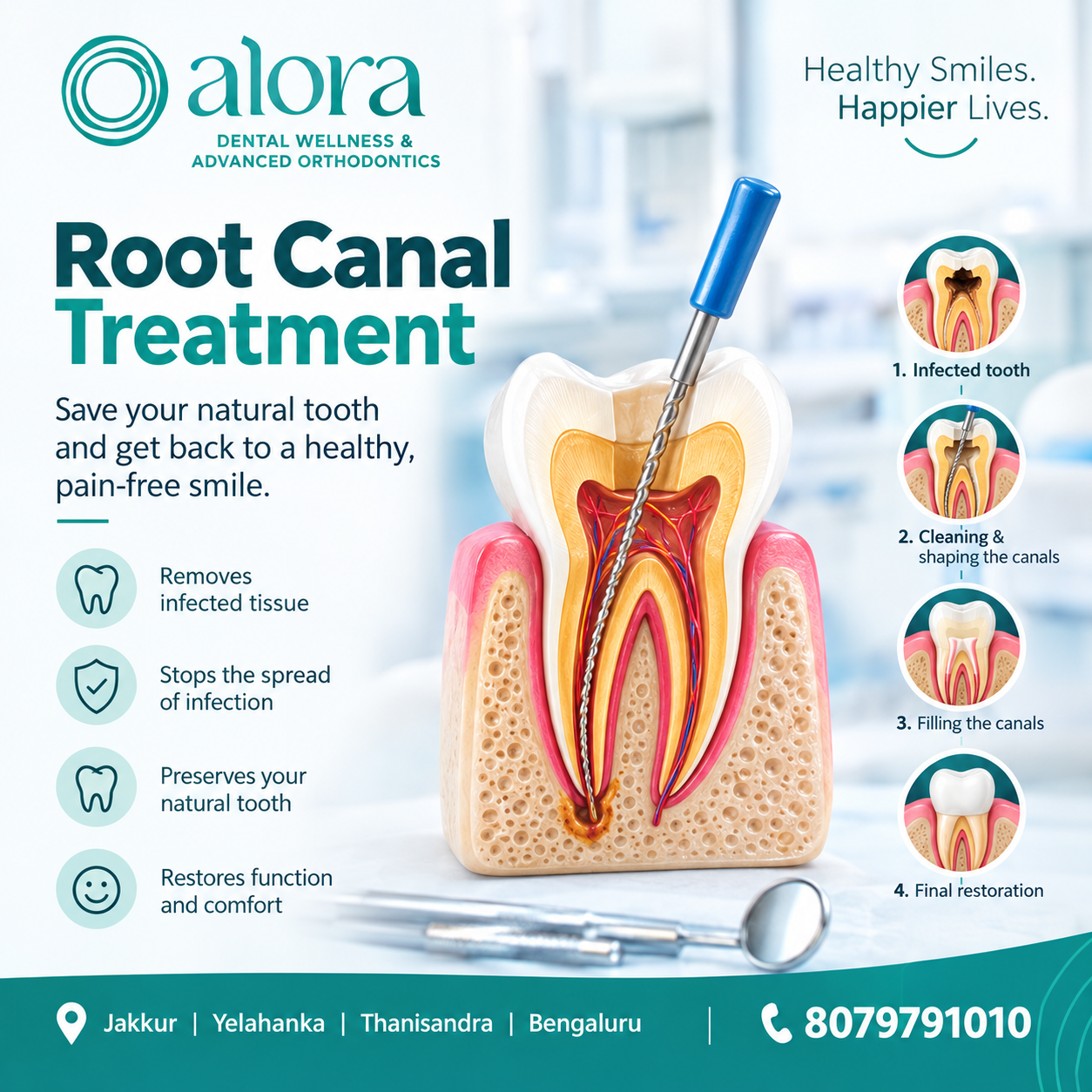
A severe toothache can make even simple activities like eating, drinking, or sleeping uncomfortable. In many cases, persistent tooth pain may be the result of an infection or inflammation of the tissue within the tooth. When the inner pulp becomes damaged, root canal treatment can help remove the infection, relieve discomfort, and save the natural tooth.
Many people feel nervous when they hear the words “root canal.” However, modern dental techniques and effective local anaesthesia have made the procedure far more comfortable than many people expect. At Alora Dental Wellness, root canal treatment is provided with a focus on accurate diagnosis, patient comfort, and preserving the natural tooth whenever possible.
What Is a Root Canal Treatment?
Inside every tooth is a soft tissue called the dental pulp. This pulp contains nerves, blood vessels, and connective tissue. In cases when bacteria get into the interior of the tooth due to deep decay, cracks, trauma, or multiple dental procedures, the pulp becomes inflamed or infected.
Root canal treatment or endodontics is a medical procedure where the affected or diseased pulp carefully cleaning the inside of the tooth, disinfecting the root canals, and sealing them to help prevent further infection.
The main purpose of the treatment is to save the tooth from extraction. Alora Dental Wellness describes root canal treatment as a procedure used to remove infection, clean the inside of the tooth, and restore it to help protect against further problems.
When Do You Need a Root Canal?
The dentist will check your tooth and may need to recommend X-rays or other diagnostic methods to determine whether root canal treatment is necessary.
Some common signs that may indicate a problem inside the tooth include:
- Persistent or severe toothache
- Hot or Cold Food Sensitivity
- Pain while biting or chewing
- Swelling or tenderness around the gums
- Tooth discoloration
- A pimple-like swelling on the gums
- Deep decay or a severely damaged tooth
It is important to remember that not every infected tooth causes noticeable pain. Regular dental examinations can help identify problems before they become more serious.
Root Canal Procedure: Step by Step
This information can assist you in being less anxious and prepare you for treatment.
1. Examination and Diagnosis
Firstly, the dentist performs a dental examination on you. The dentist discusses your symptoms with you and examines the teeth that require treatment. Dental X-rays might be taken in order to find out whether there is any deep decay, infection or any other change around the root of the tooth.
2. Local Anaesthesia
Before beginning the procedure, the dentist administers local anaesthesia to numb the treatment area. The goal is to keep you comfortable throughout the procedure.
Modern dentistry places significant emphasis on patient comfort, and effective numbing techniques can help make treatment less stressful for anxious patients.
3. Accessing the Inside of the Tooth
Once you have been anaesthetised, the dentist makes a small opening to reach the infected or damaged pulp inside the tooth.
The infected tissue is then carefully removed from the pulp chamber and root canals.
4. Cleaning and Shaping the Root Canals
The inside of the tooth contains narrow channels called root canals. These canals are carefully cleaned and shaped using specialised instruments.
The purpose of this stage is to remove infected tissue and bacteria while preparing the canals for sealing. Modern equipment can improve the precision and efficiency of dental procedures.
5. Disinfecting the Tooth
The process can be completed in one visit if advanced equipment and techniques are used, but sometimes it may need further treatment. It depends on the condition of the tooth. may be completed in one visit or may require more than one appointment.
The process can be completed in one visit if an advanced technique or equipment is used, but sometimes it may need further treatment. It depends on the condition of the tooth.
6. Filling and Sealing the Root Canals
Once the canals are properly cleaned and prepared, they are filled with a suitable material and sealed.
This helps prevent bacteria from entering the canals again and supports the long-term protection of the tooth.
7. Restoring the Tooth
Following root canal therapy, your tooth might require additional dental restoration. Based on the quantity of tooth material left, your dentist might opt for a dental filling or a dental crown.
The crown will help strengthen the tooth that has been weakened, thereby decreasing the chances of tooth fracturing. Your dentist will advise you on the best type of restoration based on your individual needs.
Is Root Canal Treatment Painful?
One of the most common concerns patients have is whether a root canal is painful.
The procedure itself is generally performed under local anaesthesia, which helps numb the area being treated. Many patients find that the treatment is similar in comfort to other common dental procedures.
In fact, a root canal is often performed to address the pain caused by infection or inflammation inside the tooth. The goal of treatment is to remove the source of the problem and preserve the tooth.
Root Canal Recovery: What to Expect
Recovery after root canal treatment is usually manageable. It is common to experience mild tenderness or sensitivity around the treated tooth for a few days, particularly when biting or chewing.
Your dentist may recommend appropriate pain relief if necessary.
Here are some important recovery tips:
Avoid Chewing Hard Foods Immediately
Avoid chewing hard, sticky, or crunchy foods on the affected tooth till its final restoration has been done. The tooth may be more vulnerable before it receives permanent protection.
Maintain Good Oral Hygiene
Continue brushing your teeth twice daily and cleaning between your teeth as recommended by your dentist. Keeping your mouth clean supports long-term oral health.
Follow Your Dentist's Instructions
Every patient and treatment is different. Follow all the recommended aftercare guidelines provided by your dentist, including recommendations about medication and follow-up appointments.
Attend Follow-Up Visits
If your dentist schedules a follow-up appointment or recommends a crown, it is important not to delay the restoration. Prompt completion of the treatment plan can help protect the tooth.
How Long Does Recovery Take?
Most people are able to go back to their regular activities soon after treatment. Mild sensitivity may continue for a few days but should gradually improve.
Recovery will depend on several things, including:
- The severity of the infection
- The condition of the tooth before treatment
- The complexity of the root canal system
- Whether swelling was present
- The type of final restoration required
If pain becomes severe, swelling increases, or symptoms do not improve, contact your dentist for advice.
Why Saving Your Natural Tooth Matters
Teeth are essential for many functions, including eating, talking, and keeping an attractive smile. Whenever possible, retaining your natural teeth is beneficial.
Root canal treatment allows dentists to treat infection inside a tooth while keeping the outer structure of the tooth in place. After appropriate restoration, the treated tooth can continue to function as part of your natural smile.
Root Canal Treatment at Alora Dental Wellness. If you are feeling continuous pain in your tooth, tooth sensitivity, or signs of infection, an early dental consultation can help identify the cause. Alora Dental Wellness offers comprehensive dental care with a focus on patient comfort, personalised treatment planning, and modern technology. The clinic provides root canal treatment as part of its range of restorative dental services.
Protect Your Natural Smile
A root canal need not be viewed as a painful dental procedure. It is an essential procedure aimed at ridding the tooth of infection, alleviating pain and preserving your natural tooth.
Root canals usually involve examination, numbing, cleaning and disinfection of the root canals of the infected pulp, sealing of the tooth, and final restoration. The healing process is normally uncomplicated for those who adhere to the post-procedure guidelines provided by the dentist.
Should you be experiencing tooth pain or sensitivity, do not delay getting dental guidance in order to avoid making the situation worse.